All There in Black and White
A sense of theatre, a talent for recognizing the beauty in juxtaposition and an enormous appreciation for history makes this vendor’s home a visual delight.
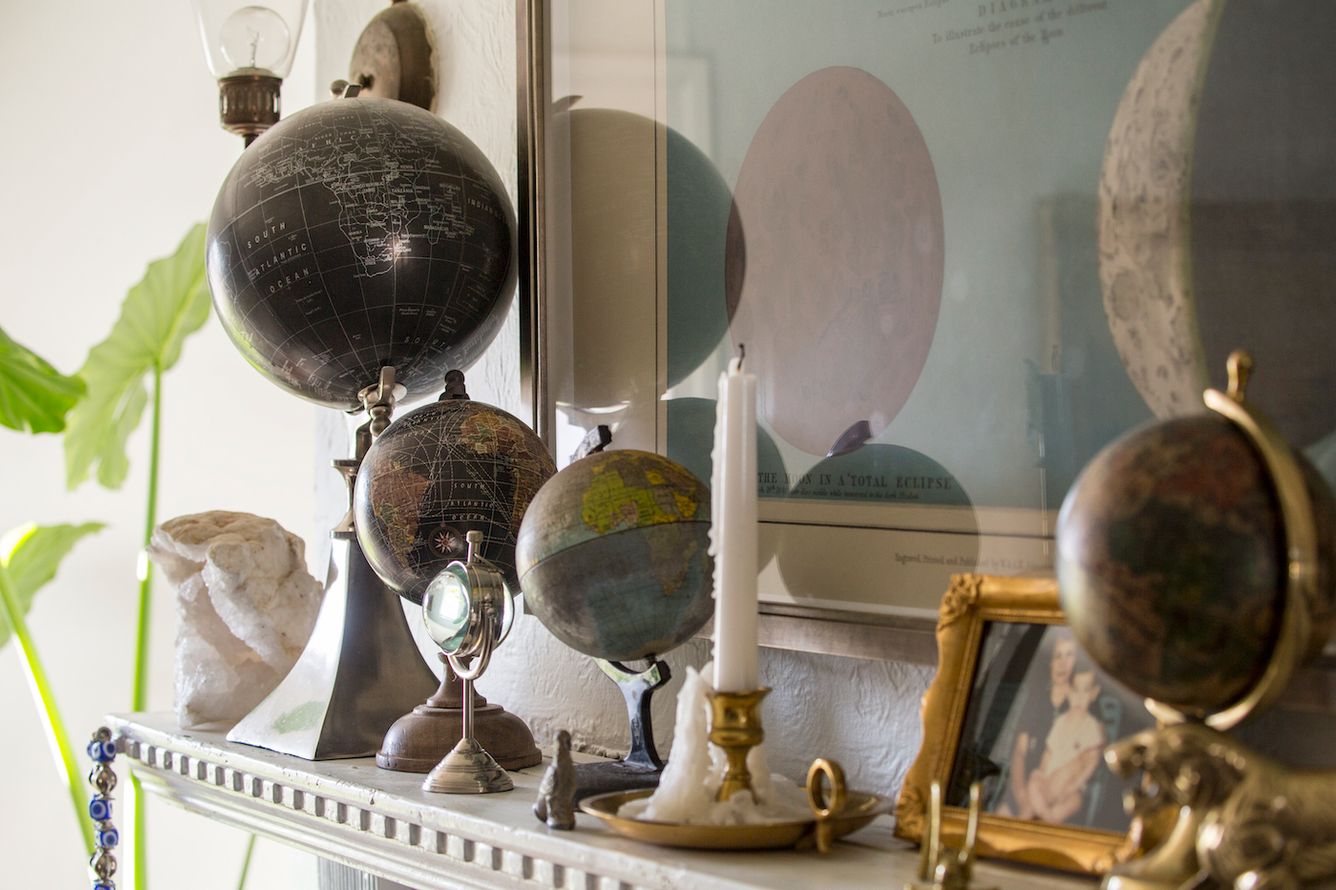
As an avid collector and a purveyor of décor and furniture, it’s only natural that Cobus van Niekerk becomes attached to some of the wonderful discoveries he finds at auctions or by chance in exotic locales. But for the most part, once he’s had his fill of enjoyment, he’s happy to pass on his finds to his customers who visit his antiques and collectibles shop, based right at his home in Stanford, a charming village some two hours from Cape Town, South Africa. “I like to ‘play’ with the items I find, mix them up and move them around,” Cobus says. “I’m not a snob or a purist when it comes to putting a Regency piece with 60’s chairs; in fact, that’s what I love to do. And once I’m ready to move on, then that’s it—goodbye,” he laughs. Of course he’s attached to some key furniture items that he’s had for many years and has a current obsession with urns of all shapes, sizes and materials, but precious he is not. Cobus has lived in Stanford for 20 years. Originally he intended to use his historical escape as a weekend home but gradually the allure of village life proved too strong and he moved here permanently. “Growing up in the sixties, we always lived in modern homes, yet as an adult I longed for an old space,” he says. While original deeds and plans to this historical dwelling have proven impossible to uncover, he estimates that it was built in the late 1700’s. “It’s much older than the other houses here,” says Cobus, who explains that it has been everything from a post office in the 1920’s to the local telephone exchange (now his bedroom) and even a small library. The house is the shape of an upside-down T, with the cross section on the street side and the long, vertical arm, running away from the street. This means that each of the living spaces, from reception room to sitting room, dining room and kitchen lead off from one another. The unusual design is typical of older houses and works perfectly for Cobus, who has decorated his space to unfold a series of visual delights as you delve further into his home. Adding to the sense of theatre is Cobus’s daring use of color. “When I first bought the place, I painted everything all white, the builders were horrified that I was wrecking valuable yellowwood and Oregon pine, but more recently I decided to go with black walls and I love it,” he says. Rather than make his home seem gloomy, it brings a sense of drama to the equation and his gleaming antiques and carefully curated collections pop against their backdrop. As a direct juxtaposition to the moody, black painted interiors, Cobus’s studio and shop is a white painted, light-splashed space. It’s here that this consummate collector’s eclectic and ever-changing cornucopia of quirky finds, prized fossils and his own-designed decorative objects, are on display and for sale. “I studied art and history of art so I know my antiques but I really am not too precious about what I buy, decorate with and sell,” he says, and it seems his unique approach and eye works because his stock doesn’t sit around for very long.
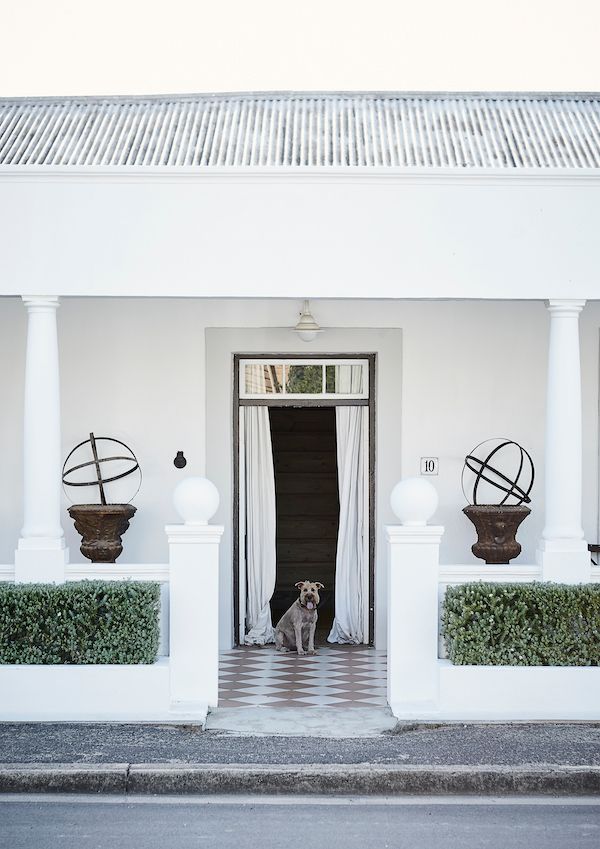
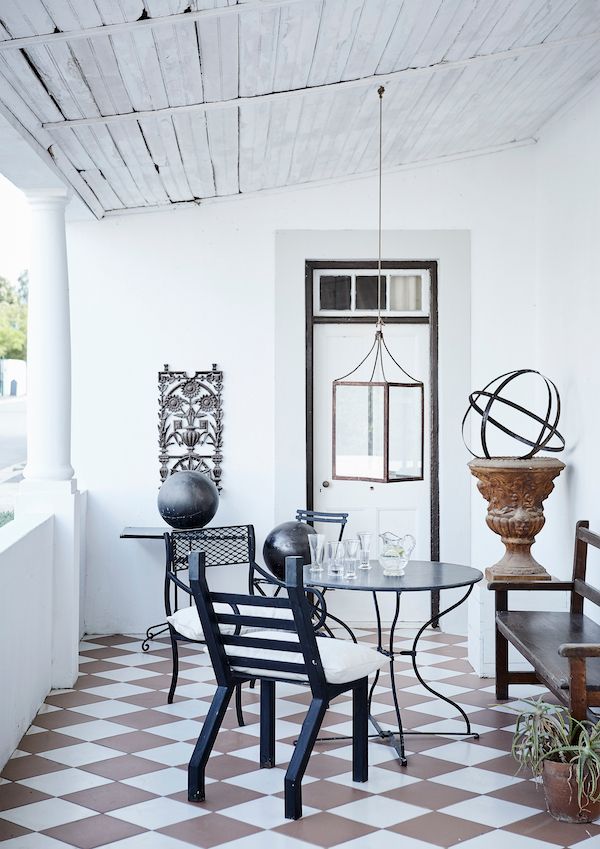
EVOLVING DOOR. “The addition of pillars to a simple country home would have happened in the 1920’s to denote that the building was for official use,” says homeowner Cobus van Niekerk of his home's facade. His covered verandah looks onto the street and is a showcase of his bold ability to marry different styles confidently.

WELCOME TO THE CLUB. In Cobus’s reception room, he had original Regency-era chairs recovered in leather. The gleaming rosewood card table dominates the dramatic sitting room. “I wanted to create a clubby atmosphere, I’m not the type to go to the local pub for a drink, but I’m more than happy to host drinks here,” he laughs. The convex mirror above the mantelpiece helps enhance the theatrical nature of this room.
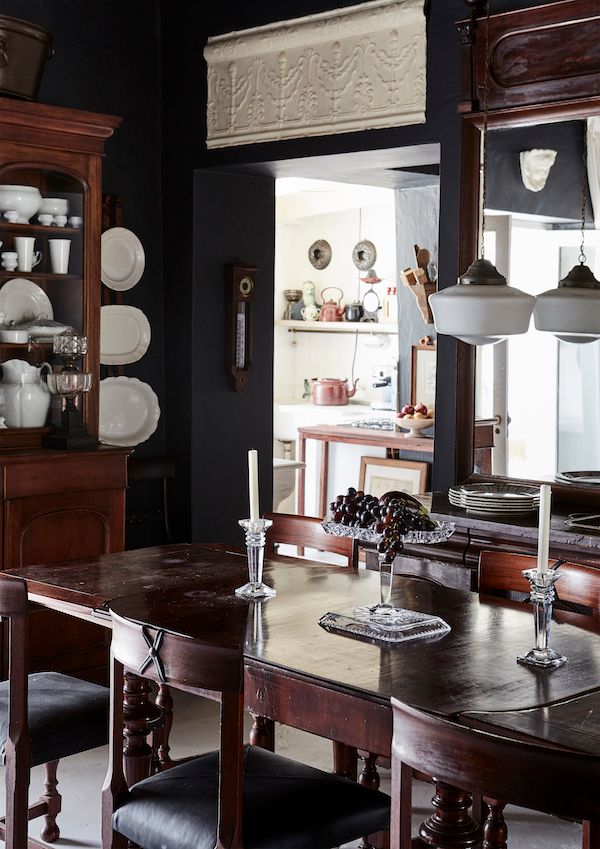
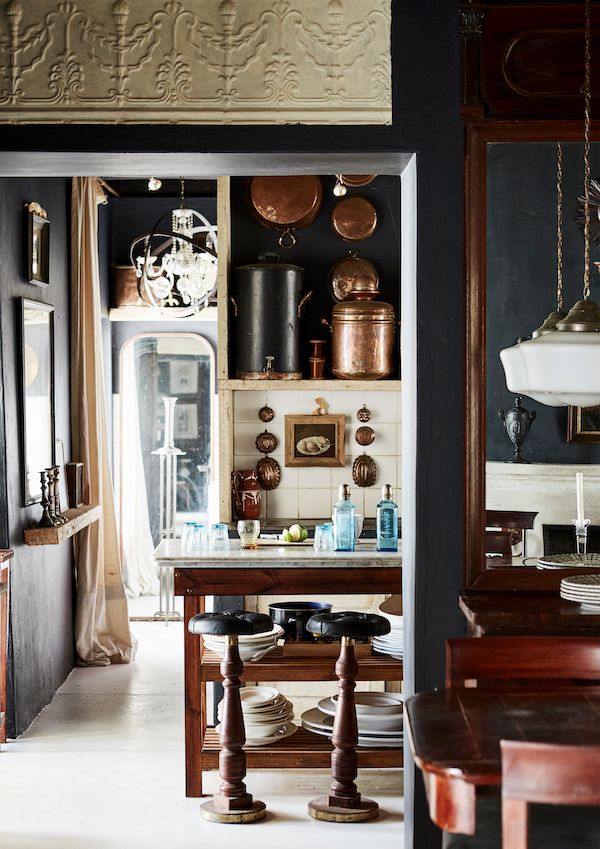
CHARACTER STUDY. An oversized mirror bounces light beautifully in the dining room. The old lampshades were salvaged from a church and the large bureau is filled with platters which Cobus uses when he entertains. The kitchen, which plays host to an old workbench with a reclaimed marble top, pays homage to the past beautifully. Collections of old copper molds glow against their black painted backdrop.

APPETIZING MIX. Typical of old kitchens are copper molds and kitchen implements. The contrast in textures—wood, metal, marble and shiny tiles—results in a fascinating aesthetic combination.
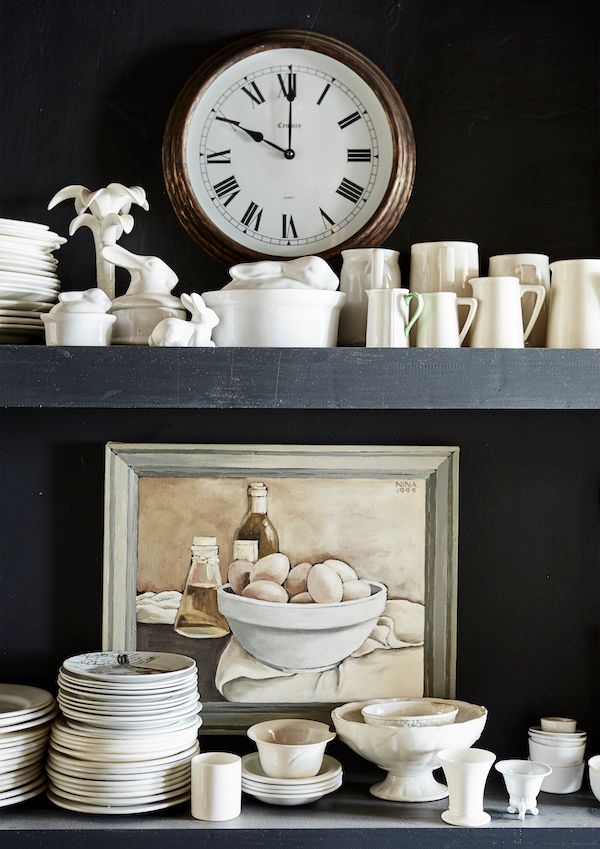
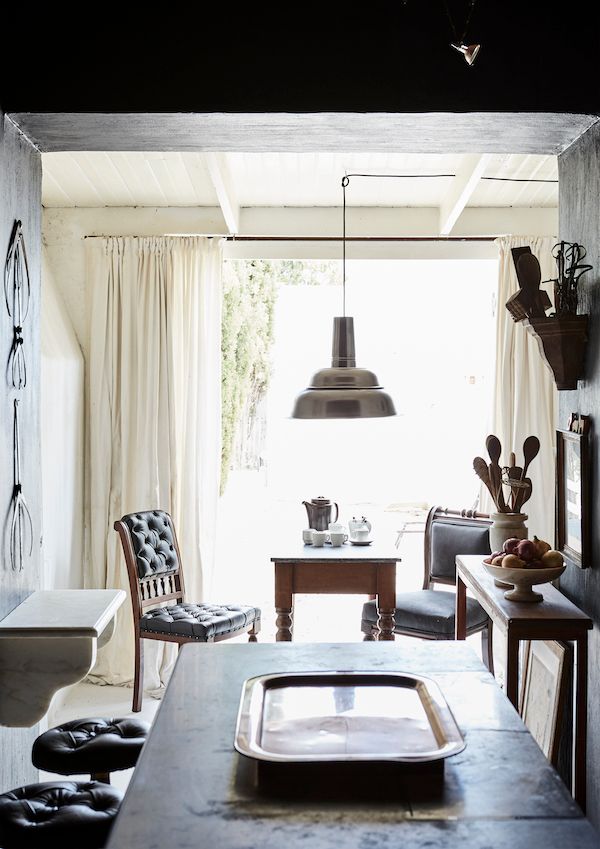
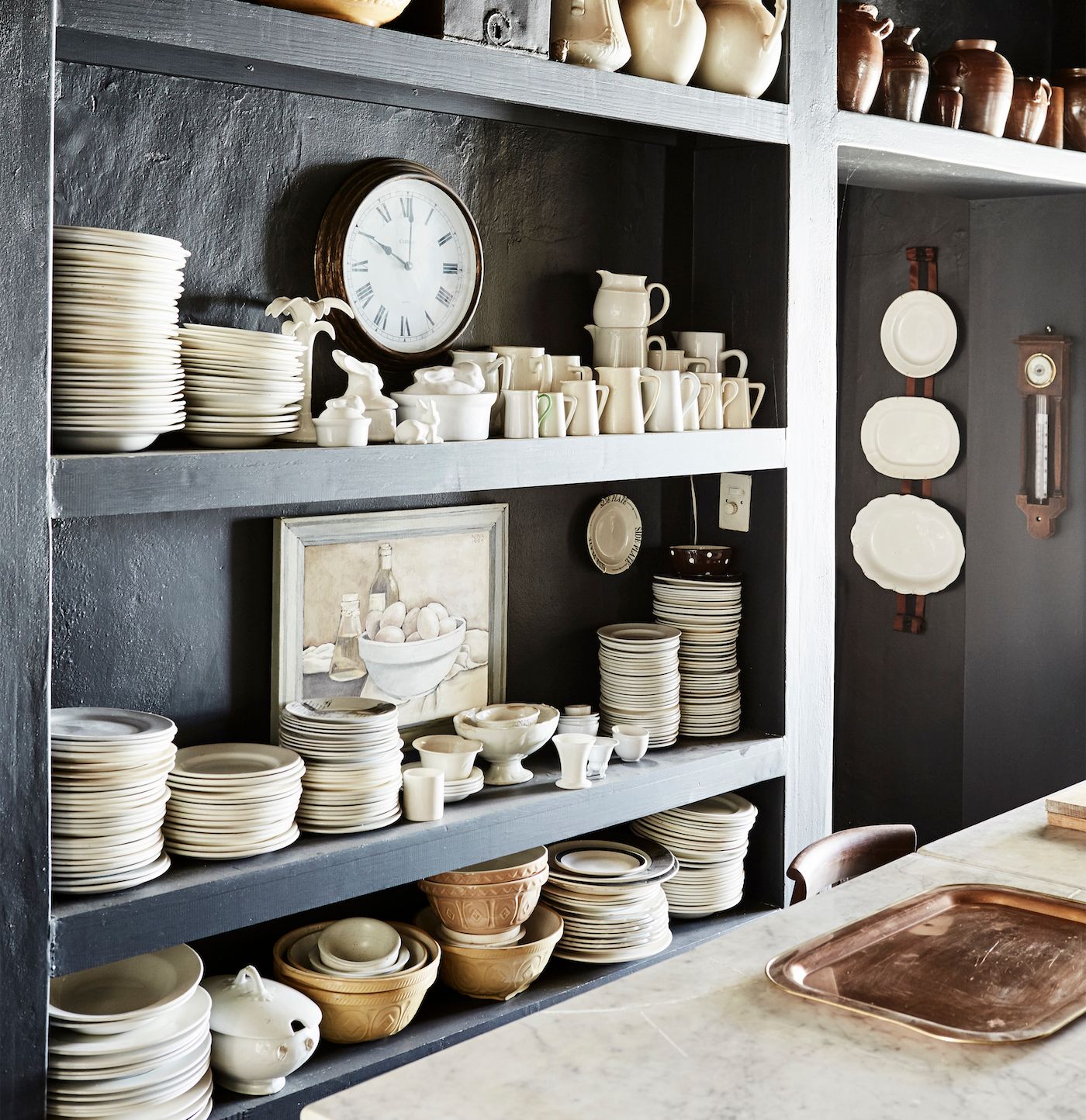
ROOM WITH A VIEW. A collectors’ eye is apparent in Cobus’s collection of white tableware that contrasts beautifully against the black walls. The painting is by his school art teacher. The galley-style kitchen has a place for everything and everything has a place and looks out towards the sunsplashed courtyard.
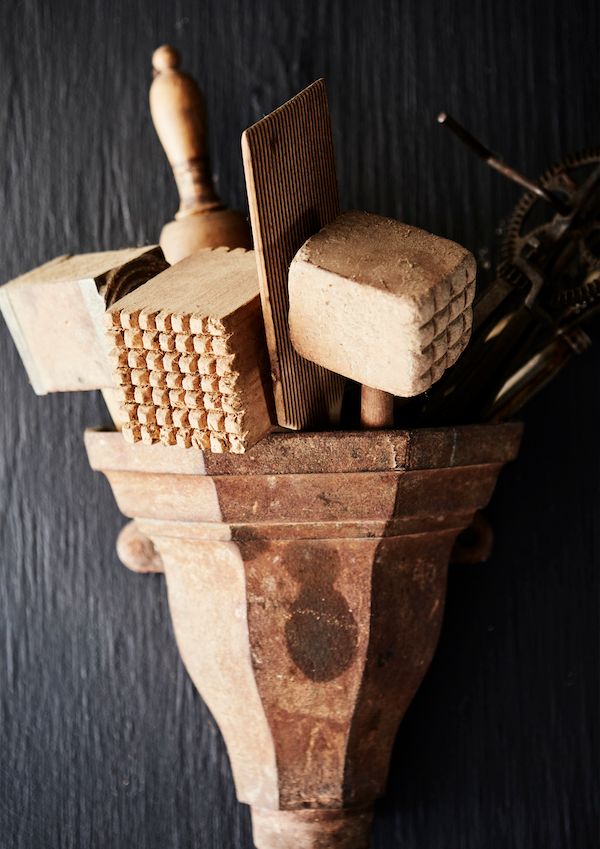
HOLD IT. Ever the upcycler, Cobus refashioned a piece of Victorian molding into a storage vessel for kitchen implements.
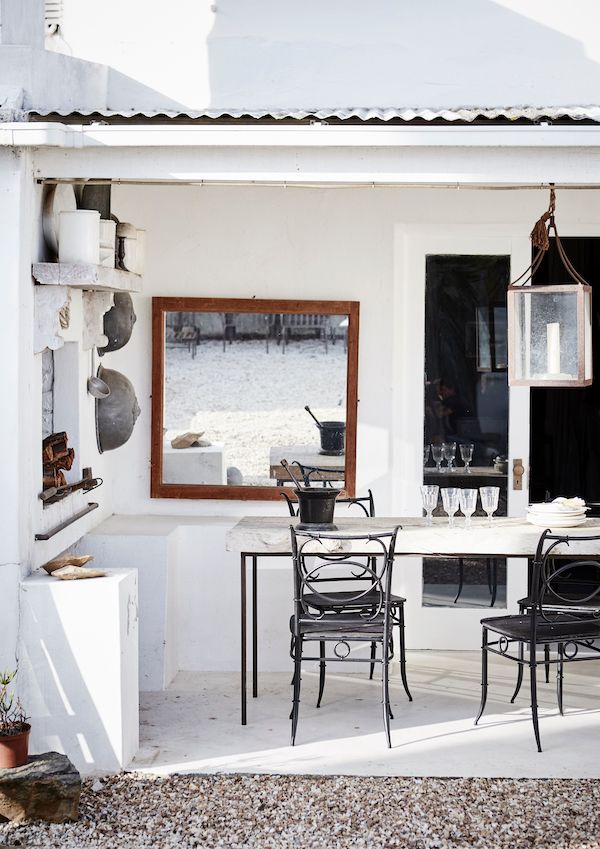
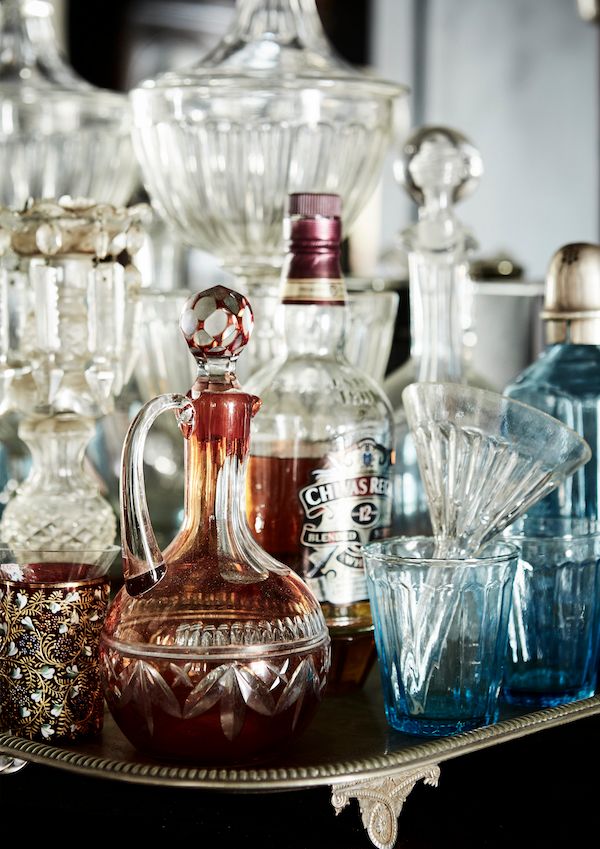
ENTERTAINING NOTIONS. With its built in outdoor fireplace and a wall mounted mirror, the outdoor courtyard is a comfortable and inviting space that’s perfect for entertaining. Decanters and glassware bought in Italy cast beautiful colors and light.
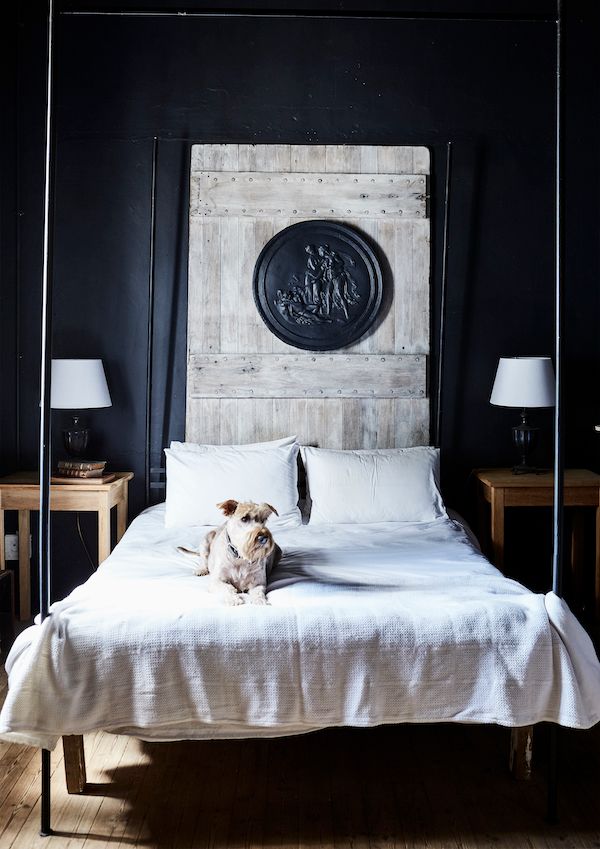
RESTRAINED AND RESTFUL. In contrast to Cobus’s decorated living spaces, this bedroom is an ascetic space, featuring old typing college tables used as bedside pedestals. “I bought 80 of them from a defunct secretarial college,” Cobus reports.
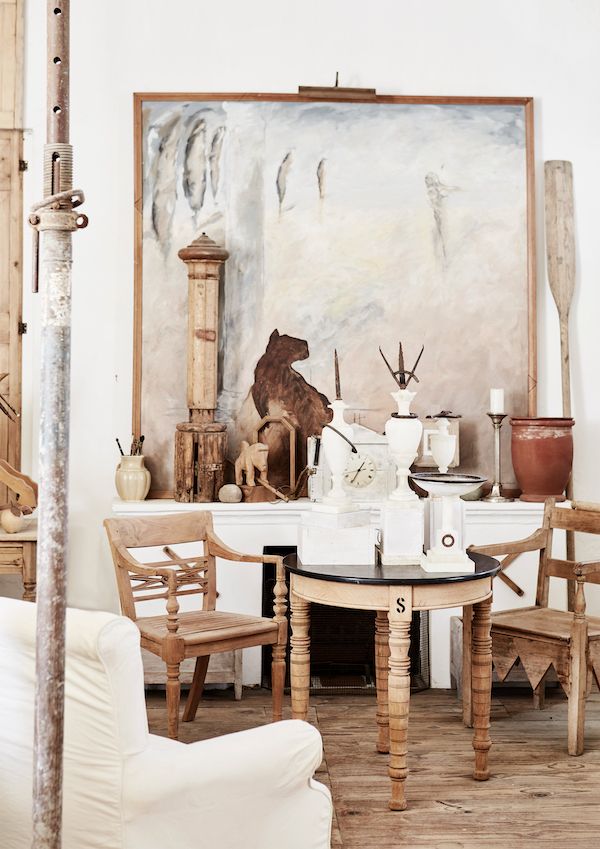
HOME WORK. Cobus’s studio and shop play host to some of his urns and a painting he did.
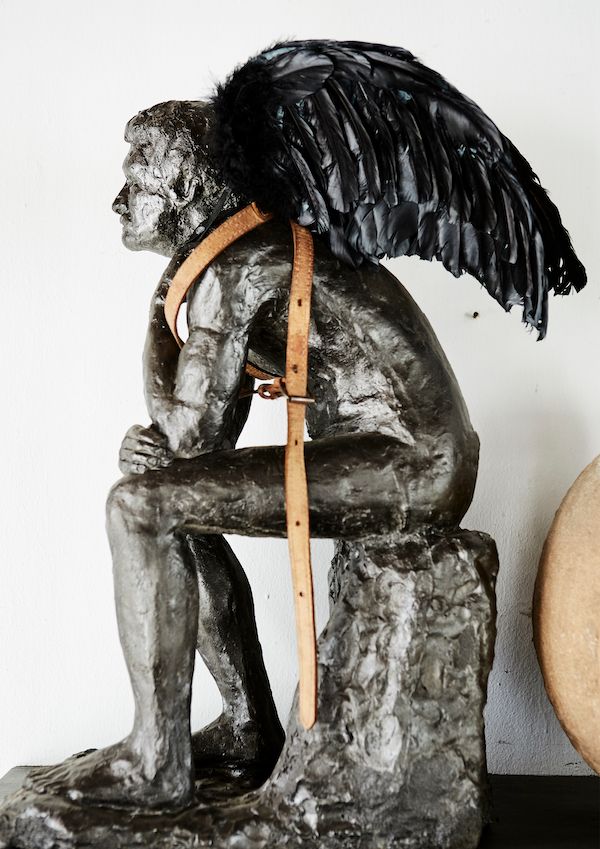
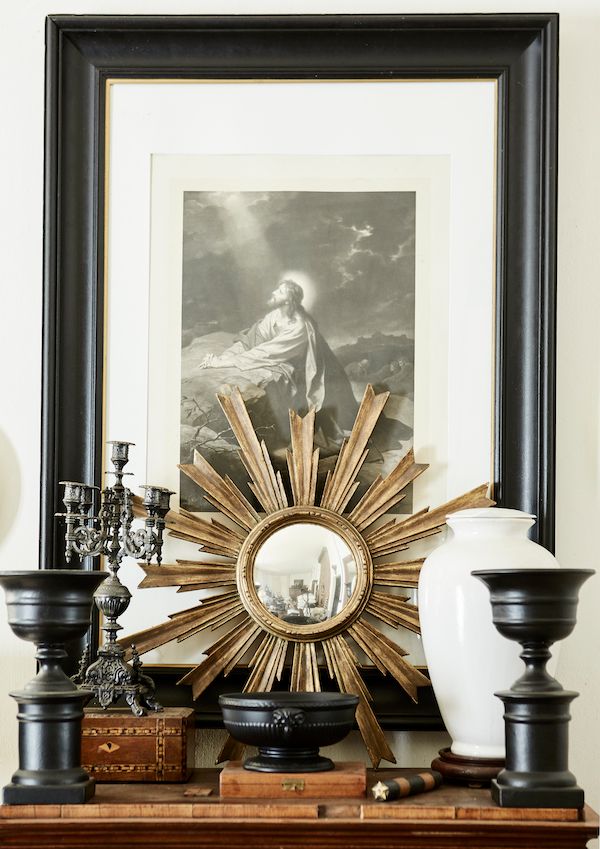
DIVINE INSPIRATION. Cobus made the beautiful sculpture while he was a student that’s currently enjoying its incarnation as a fallen angel in his shop. The Italian Regency style starburst mirror is gilded plaster of Paris. The Wedgwood basalt urns are some of Cobus’s current prized collectibles. The religious image was found in Belgium.
PHOTOS Warren Heath/Bureaux
WORDS Vicki Sleet/Bureaux
STYLING & PRODUCER Sven Alberding/Bureaux
HOME PAGE